

A whale, a pod of dolphins and a community that cared
Ask an environmental educator what keeps them going, and you’ll often hear about moments that money simply can’t buy.
Like watching a pod of dolphins escort a lost young whale safely back to the ocean.
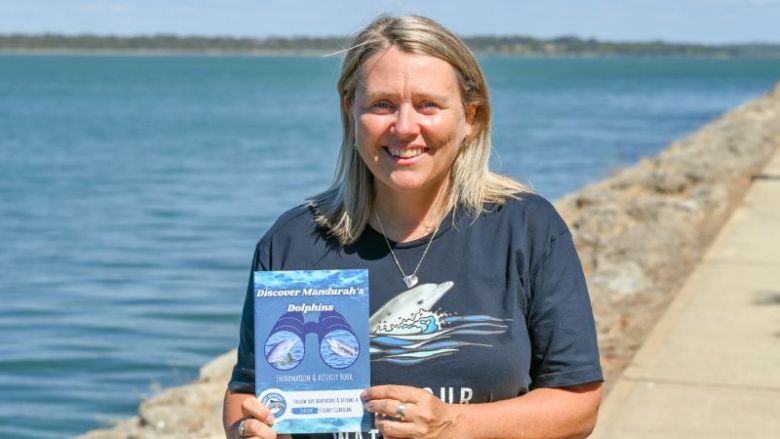
If you’ve ever emailed AAEE about your membership, received a renewal reminder or had an administrative question answered, chances are you’ve been chatting with our Administration Officer, Robyn Bickell. What many members may not know is that Robyn is also a passionate environmental educator and volunteer with the Estuary Guardians in Mandurah, Western Australia.
Estuary Guardians began in 2015 as a project led by students and teachers from John Tonkin College. Over a decade later, it has grown into a thriving volunteer organisation that monitors the Peel-Harvey Estuary’s resident dolphin population, contributes to citizen science and delivers education programs to schools, community groups and local events.
For Robyn, education has always been at the heart of the work.
“The more people who know about the dolphins and the threats they face, the better. There are more people watching out for the dolphins and letting us know when they see any injured, stranded or deceased dolphins. We can all look out for them, everyone can be a guardian of the estuary.”
That philosophy was put into action when a juvenile Southern Right Whale unexpectedly entered the Peel-Harvey Estuary last month.
For 19 days, volunteers, researchers and community members monitored the whale’s movements, hoping it would find its way back to deeper water. The community affectionately nicknamed the whale “Gail”, and each day people gathered along the waterways, sharing sightings and quietly willing the young whale home.
It wasn’t just the volunteers keeping watch.
“It was bucketing down with rain, but there were still so many people out getting drenched, running along the Cut following the whale, all hoping to catch a glimpse of this incredible sight.”
Then came the moment no one will forget.
On a higher tide, the whale finally made its way towards the Dawesville Cut. After three unsuccessful attempts to pass beneath the bridge, it found the right path guided by a familiar group of local dolphins.
Among them was Goose, one of Robyn’s favourites.
“I’ve watched Goose since she was a calf,” Robyn says. “She was orphaned and taken in by another adult female. Since then she’s survived fishing line entanglement, a shark encounter that left her without the top of her dorsal fin, and now she’s raising her very first calf.”
It was the culmination of 19 days of shared hope.
As the whale finally reached the ocean, the dolphins turned back towards the estuary, leaping clear of the water. The young whale continued breaching again and again, as if celebrating its return to where it belonged.
“It was the moment we’d all been waiting for. With the community and volunteers keeping watch every day, it felt fitting to see him up close and offer a final farewell as he made his way home.”
For Robyn, the story perfectly illustrates why environmental education matters.
“We can’t physically help wildlife in every situation,” she explains. “But education and bringing more awareness is something we can do.”
When people understand the animals they share their environment with, they begin to notice them. They care, they report injuries and strandings, they share sightings. They become part of the solution.
Watch Robyn’s story below of the Mandurah Estuary Guardians and learn more about their incredible work protecting the dolphins of the Peel-Harvey Estuary.